Think about the last time your team posted a job advert. Within days, hundreds of CVs land in the inbox. Someone has to read them, shortlist the promising ones, send holding emails, arrange interviews, chase responses, and keep notes on every candidate. That process is slow, expensive, and frankly exhausting, even for experienced recruiters.
Now imagine a version of that same applicant tracking process where the initial screening takes minutes instead of days, interview slots are booked automatically and candidates receive updates in real time. That is not a future vision. For a growing number of UK employers, it is already the reality in 2026.
Artificial intelligence has moved firmly into the heart of recruitment, and it is changing the way organisations find, assess, and hire people at every level. Whether you are running a small HR team or managing talent acquisition for a large enterprise, understanding what is happening, finding expert ATS companies, and figuring out what AI means for you is genuinely useful right now.
This article walks you through exactly that.
AI Recruitment in the UK
According to CIPD’s Recruitment Trends Report 2025, 67% of UK recruiters are now using AI in screening or sourcing candidates, up from just 24% in 2022. That is a remarkable shift in a short space of time and the momentum is not slowing.
Several things have driven this acceleration. First, hiring volumes have remained high even as budgets have tightened, which means teams are being asked to do more with less. Second, the quality of AI tools available has improved dramatically. Early systems were clunky, prone to errors and difficult to integrate with existing HR platforms. Modern tools are far more capable.
The result is that AI is no longer a niche experiment for forward-thinking companies. It is becoming standard practice across most sectors.
AI in the Recruitment Process
CV Screening and Shortlisting
CV screening is where most employers first encounter AI in recruitment, and where it often delivers the clearest time savings. Rather than manually reading every application, AI-powered applicant tracking systems can parse CVs at scale, identify relevant experience and rank candidates against the requirements of the role.
The important thing to understand is that modern AI screening goes well beyond simple keyword matching. Earlier generation tools would filter out a strong candidate simply because they used certain terminology. Today’s systems use more sophisticated language understanding to interpret what a candidate’s experience actually means, not just whether certain words appear on the page.
For busy hiring teams, this is genuinely transformative. What might take a recruiter several days to work through can be processed in a fraction of the time, with a shortlist ready to review when they arrive at their desk.
Related: 5 Technologies Used in the Recruitment and Selection Process
Automated Communication and Scheduling
One of the most practical applications of AI in recruitment is something candidates notice immediately: faster, more consistent communication.
AI-powered tools can send acknowledgement emails the moment someone applies, keep candidates updated on where they are in the process, and handle the back-and-forth of interview scheduling automatically. Rather than a recruiter manually finding a slot that works for three different people’s diaries, the system handles it.
Clear communication matters more than it might seem. In a competitive job market, candidates are evaluating employers as much as employers are evaluating candidates. Slow responses and communication gaps have always damaged employer brands. AI helps close those gaps without adding to the workload of the hiring team.
Analytics for Better Hiring Decisions
Beyond the practical tasks of screening and scheduling, AI is also helping organisations make smarter decisions about who to hire and when.
Predictive analytics tools analyse patterns in historical hiring data to identify which candidate profiles have tended to succeed in specific roles, which channels have produced the strongest hires, and where drop-off points in the hiring process are losing good people. Over time, this builds a useful intelligence layer that helps organisations hire more effectively.
AI-Assisted Interviews
Video interview platforms that use AI to support the assessment process have become more common, though they also attract some of the most debate.
The basic concept is that candidates record responses to structured questions, and AI helps analyse elements such as how clearly ideas are communicated and how well responses address the competencies being assessed. A human reviewer then uses these insights as one input alongside everything else they know about the candidate.
Done well, this can make structured interviewing more scalable. Done poorly, or without adequate human oversight, it raises serious concerns about fairness and transparency.
This is an area where UK employers need to be especially thoughtful.
Job Description Optimisation
A highly practical application of AI is in improving the quality of job descriptions. AI tools can review a draft posting, flag language that may discourage certain groups of candidates from applying, suggest clearer alternatives, and benchmark the proposed salary against live market data.
Job adverts matter because the job description is where recruitment begins. A poorly written post that uses exclusionary language, or that offers a salary significantly below the market rate will attract fewer good candidates. Getting that first step right has a positive effect on everything that follows.
Candidates and AI
Something worth paying attention to is the fact that candidates have not sat passively while employers have adopted AI tools. They have adapted too.
Recent research from Indeed found that 70% of job seekers globally now use generative AI to help them research companies, draft cover letters, and prepare for interviews. In the UK, data from the CIPD’s Candidate Behaviour Report 2025 found that 52% of candidates are using AI for CV writing. A separate analysis by JobLabs found that roughly 30% of UK CVs now contain detectable AI-generated content.
When candidates are using AI to present themselves, and employers are using AI to screen applications, the risk is that both sides end up optimising for each other’s tools rather than for the actual quality of the match.
The practical response from employers who are thinking clearly about this is to place more emphasis on assessments that go beyond what a document can show. Work samples, structured skills tests, and well-designed interview questions that require candidates to demonstrate their thinking in the moment are all becoming more important as a result.
The UK Regulatory Landscape
AI is the area where UK employers most need to pay attention right now, because the rules are changing.
In March 2026, the Information Commissioner’s Office published a significant report on automated decision-making in recruitment, drawing on evidence gathered from more than 30 UK employers. The findings were that many employers do not realise that their AI recruitment tools are making solely automated decisions about candidates, rather than simply supporting human decision-makers.
The Data Act 2025 updated the UK GDPR’s rules on automated decisions. Under the updated legislation, candidates have a right to question decisions made by automated processes and to request human review. Employers who are using AI tools that effectively make the final call on whether a candidate progresses, without meaningful human involvement, need to ensure they have the right safeguards in place and that candidates are informed about how the process works.
Common Concerns About AI Recruitment
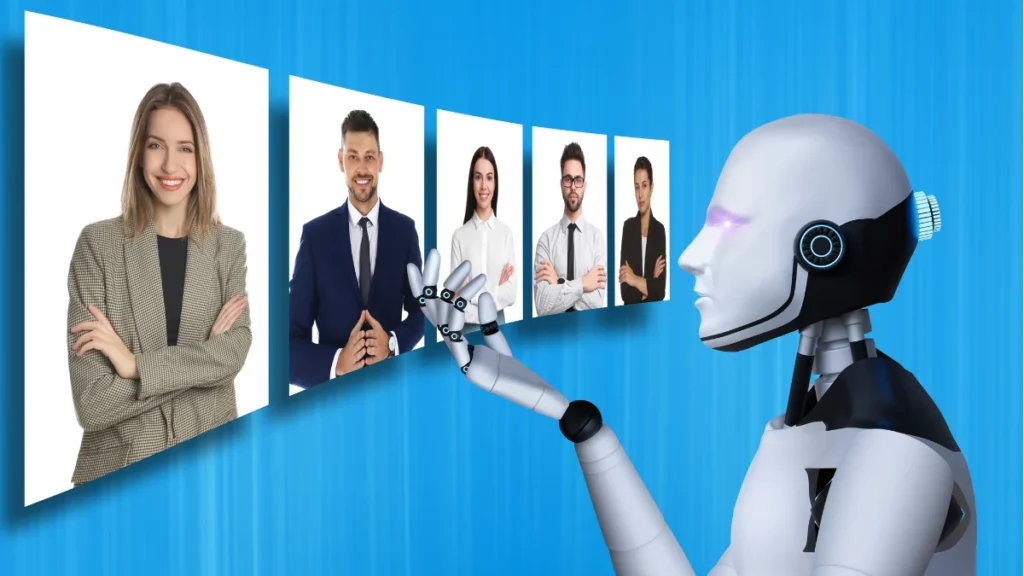
It would not be honest to write about AI recruitment without acknowledging that there are real concerns alongside the benefits. Here are the ones that come up most often, and a practical perspective on each.
Does AI Amplify Bias?
AI bias is the most serious concern. AI screening models learn from historical data. If that data reflects past patterns of who was hired, and if those patterns were themselves shaped by human bias, then there is a genuine risk that the AI will encode and scale those same patterns.
The good news is that this risk is manageable if employers treat it as an ongoing responsibility rather than a box to tick at setup. Leading ATS platforms now offer tools to anonymise applications during initial screening, removing names, addresses, and educational institutions that can trigger unconscious bias.
Must Read: How Do You Scale a Recruitment Startup?
What About Candidate Trust?
Research consistently shows that candidates have reservations about AI in hiring. A Gartner survey found that only 26% of applicants trust AI to evaluate them fairly. That is a challenge for employers to take seriously.
The most effective response is transparency. Employers who are clear with candidates about what AI tools they use, what role those tools play and how human judgement is involved in the final decision tend to see higher candidate satisfaction even when AI is part of the process. Candidates are not necessarily opposed to AI in recruitment. They are opposed to feeling like they are being assessed by a black box with no recourse.
Practical Steps for UK Employers Getting Started
If you are thinking about introducing AI into your recruitment process or looking to use it more effectively, here is a practical way to approach it.
- Start with the problem you are actually trying to solve. AI recruitment tools cover a wide range of functions. CV screening, candidate communication, interview scheduling and analytics are all distinct capabilities. Being clear about where your biggest pain points are will help you evaluate platforms sensibly.
- Ask vendors the right questions. Before signing any contract, ask specifically where candidate data is stored, whether it is used to train the AI model, and how the platform supports your obligations under UK GDPR.
- Remember AI is here to enhance human judgment. Humans should not be taken out of the hiring process and replaced by AI; AI should be assisting HR teams to come to smarter, data-backed hiring decisions faster.
- Communicate clearly with candidates. Tell applicants when AI is being used to assess their application. Explain in plain language what that means. Make it easy for them to ask questions or raise concerns.
- Review regularly. Screening models can drift, hiring conditions change, and what worked well last year may need adjusting this year. Build in a regular review cycle from the start.
Related: Free TruthFinder Alternatives
Conclusion
AI recruitment in 2026 is not a trend on the horizon. It is happening now, across UK organisations of every size and sector. The tools available are more capable than they have ever been, the business case is well established, and the regulatory framework is becoming clearer even as it evolves.
The employers who are getting the most from AI recruitment are not necessarily the ones with the biggest budgets or the most sophisticated technology. They are the ones who have been clear about what they want to achieve, taken the time to implement thoughtfully, kept humans genuinely involved in decisions, and been honest with candidates about how the process works.
That approach is well within reach for any organisation willing to take it seriously. The question is not really whether to use AI in recruitment anymore. It is how to use it in a way that works for your people, your candidates, and the increasingly important legal obligations that come with it.

Tim is Head of Events & Talent Insight at Talos360, a public speaker, and a webinar and workshop host. He shares practical insights on improving talent acquisition, employee retention, and performance management through smart technology and proven recruitment practices. At Talos360, Tim helps organisations modernise their hiring processes, streamline talent management, and build stronger strategies for long-term workforce success.