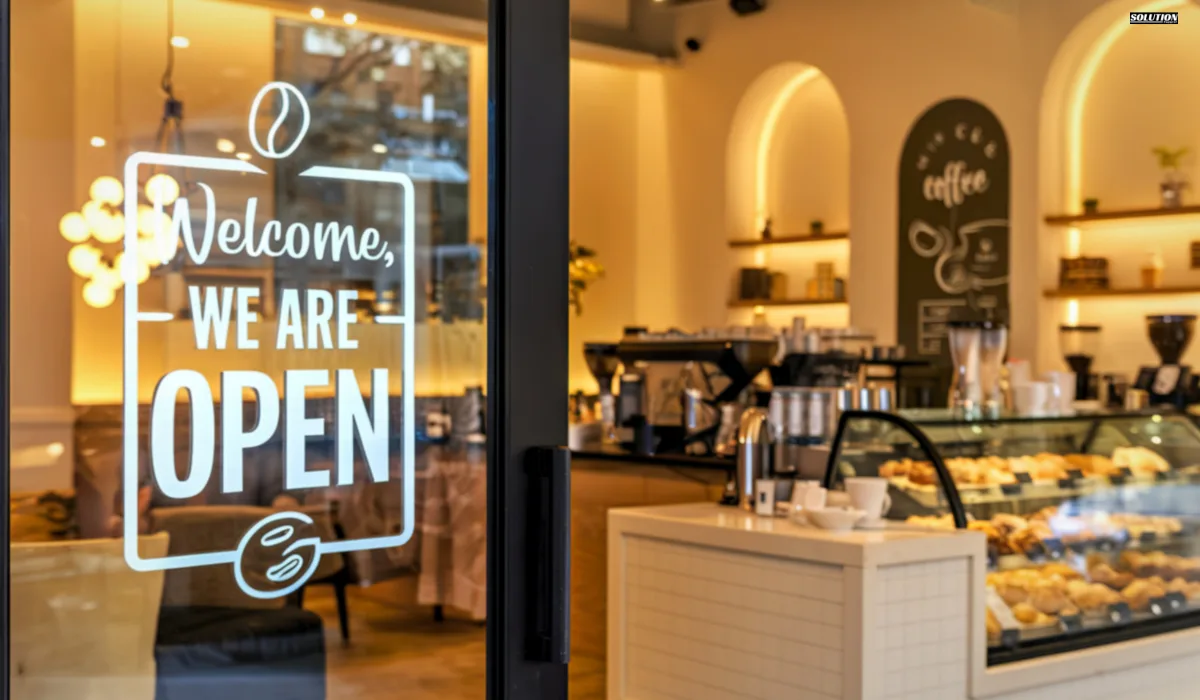
Opening a coffee shop increasingly looks like a technology project. A new operator can choose a cloud POS, mobile ordering, automated inventory management, scheduling software, accounting integrations, digital loyalty, delivery platforms, and customer analytics before selling the first cappuccino.
That sequence is backwards.
Technology can make a viable café more efficient. It cannot make an expensive location affordable, turn weak foot traffic into sufficient transaction volume, or repair a menu whose margins cannot support payroll and rent. Before deciding which systems should run the business, the owner needs to determine whether the business itself works.
Software Cannot Fix a Weak Café Business Model
The temptation to buy technology early is understandable. Software creates visible progress. Dashboards, payment terminals, online ordering, and loyalty programs make an unfinished concept feel operational.
The harder questions are less satisfying.
How many customers must the shop serve between 7 a.m. and 10 a.m.? What happens to revenue after the morning rush? Can the location process enough transactions during peak periods? Does the average ticket support the proposed staffing model? How much occupancy cost can projected sales absorb?
Those questions determine the economics long before a POS vendor does.
Consider a café built around commuters. Its commercial model depends heavily on throughput: customers arrive within a compressed morning window and expect fast service. A neighborhood café designed around longer visits has a different problem. Customers may occupy seats for an hour while purchasing relatively little, making space productivity more important.
Both businesses sell coffee. They should not necessarily have the same operating model—or the same technology stack.
Also Read: How Do You Come Up With a Business Name That Isn’t Already Taken?
Model the Daily Economics Before Buying Tools
Annual revenue forecasts can make a café look deceptively simple. Daily operating economics expose much more.
Suppose a planned shop expects an average ticket of $9.50. At 180 transactions per day and 30 operating days per month, that produces approximately $51,300 in monthly sales. Raise traffic to 230 transactions and revenue moves above $65,000 without changing the ticket.
That 50-customer difference affects much more than revenue. It may change staffing requirements, ingredient consumption, packaging, card-processing costs, waste, and the speed at which inventory turns.
This is why coffee-shop forecasting should be built from operating drivers rather than an arbitrary revenue target.
Transactions per day × average ticket × operating days = monthly sales
From there, the owner can layer in product mix and costs. Espresso beverages, brewed coffee, pastries, sandwiches, and retail products do not contribute equally to gross profit. Labor requirements also vary by menu complexity and daypart.
Rent, payroll, inventory, utilities, insurance, merchant fees, maintenance, waste, and marketing then determine how much of gross profit survives at the operating level.
A useful forecast should also ask what happens when the café misses plan. If the model requires 220 daily transactions to cover its operating structure but the location realistically supports 160, no software subscription will close that gap.
The most important pre-launch technology may therefore be the spreadsheet—or planning model—that prevents the owner from buying everything else too early.
Match the Tech Stack to the Operating Model
Once the operating model is clear, technology choices become easier because each system has a job.
For a High-Throughput Café
A commuter-heavy shop may prioritize transaction speed. The POS needs an efficient interface, payment processing needs to minimize friction, and mobile ordering can help move purchases outside the physical queue. Kitchen or barista workflow matters because every additional minute at peak demand constrains capacity.
Here, technology is partly a throughput investment.
For a Labor-Intensive Operation
A larger café with extended hours, food preparation, and multiple shifts faces a different bottleneck. Scheduling software becomes more important because staffing must follow demand by daypart rather than simply distribute hours evenly.
Payroll integration can reduce administrative work, while labor reporting can reveal whether staffing costs are drifting away from the assumptions used in the financial model.
For a Multi-Channel Business
Delivery adds another operating layer. A café selling through its counter, mobile orders, and third-party platforms needs to understand whether those channels create incremental contribution or simply move existing demand into a more expensive transaction.
The same applies to loyalty software. A rewards program has economic value when it improves visit frequency, retention, average spend, or another measurable customer behavior. Having a branded app is not itself a return on investment.
The appropriate stack therefore follows the operating model:
| Business need | Technology role |
| Faster peak-hour service | POS and mobile ordering |
| Better labor control | Scheduling and payroll systems |
| Lower inventory variance | Inventory management |
| Cleaner financial reporting | Accounting integration |
| More repeat purchases | Loyalty/CRM tools |
| Additional ordering channels | Delivery integrations |
A small owner-operated shop may initially need only a capable POS and accounting setup. Adding six interconnected platforms because a larger competitor uses them can increase subscription costs and administrative complexity without producing equivalent value.
Put the Financial Logic on Paper First
Technology purchases should come after the owner has mapped how the café is supposed to make money.
That requires more than a revenue projection. Pre-opening costs need to include the lease deposit, build-out, espresso equipment, grinders, refrigeration, furniture, smallwares, signage, initial inventory, professional fees, permits where applicable, and enough working capital to support the launch period. Technology belongs inside that budget, not beside it.
The operating assumptions should then connect pricing, customer volume, product mix, staffing, occupancy costs, marketing, and cash requirements.
This is where a coffee shop business plan can serve a more practical purpose than producing a document for investors or lenders. It forces the founder to put the concept, launch budget, operating assumptions, marketing strategy, and financial projections into the same model before committing capital.
That exercise can materially change the technology budget.
If the forecast shows labor as the primary margin risk, scheduling and labor-management tools deserve attention. If customer acquisition is the larger uncertainty, allocating more capital to an elaborate back-office stack may be premature. If morning throughput limits revenue, mobile ordering or a faster POS may have a measurable economic case.
Capital allocation becomes easier once the constraint is visible.
Buy Technology to Solve a Defined Bottleneck
Coffee-shop operators should be skeptical of technology purchased because it is considered standard rather than because it solves a specific problem.
A simple test is to write down the expected outcome before signing a software contract.
“We need inventory software” is vague. “We need to reduce unexplained ingredient variance and monitor food waste by category” defines an operating objective.
“We need a loyalty app” is equally weak. “We want to increase the share of customers returning within 30 days and measure whether incentives generate incremental gross profit” creates something management can evaluate.
The distinction matters as the business scales. Every additional platform brings subscription fees, training requirements, integrations, data management, and another process employees need to follow. Technology that removes friction can create operating leverage; technology that merely adds features can create overhead.
A café should therefore be designed in the opposite order from the way many technology marketplaces encourage founders to shop. First determine the customer volume, ticket size, margins, labor structure, occupancy economics, and capital requirements. Then identify the constraints inside that model. Only then decide which technology deserves investment.
The strongest coffee-shop tech stack is not the one with the most integrations. It is the one where every meaningful tool can answer a simple management question: What measurable problem are we paying this software to solve?

Harry O’Neill writes about all things tech, SaaS, and marketing at Solution Suggest. He’s known for turning complex ideas into clear, actionable insights. With experience working alongside top-tier companies worldwide, he helps brands connect with their audiences through content that drives real results.