
Managing social media can look deceptively simple from the outside. You create a post, add an image, choose a date, and publish it.
In reality, anyone managing several social accounts knows how quickly that routine becomes complicated.
You may be planning Instagram content while checking LinkedIn performance, responding to comments, preparing reports for clients, reviewing upcoming campaigns, and trying to understand why one post performed better than another.
That is why social media management platforms have become so useful.
Buffer is one of the familiar names in this space. It combines publishing, scheduling, analytics, community management, collaboration and AI-assisted content creation in one platform.
But Buffer isn’t necessarily the perfect fit for everyone.
Some users may want deeper analytics. Others may care more about Instagram planning, client approvals, agency workflows, social listening, or simply having more marketing functions under one roof.
So, if you’re considering moving away from Buffer—or just want to see what else is available—here are five alternatives worth exploring.
Quick Comparison: Buffer Alternatives
| Platform | Best For | Main Strength | Ideal User |
|---|---|---|---|
| Metricool | Analytics & multi-platform management | Strong analytics, planning and reporting | Creators, marketers & agencies |
| MetricoolLater | Visual social media planning | Instagram-focused planning & visual scheduling | Creators, marketers & agenciesCreators & visual brands |
| Metricool | Agencies & growing teams | Bulk scheduling, approvals & reporting | Agencies & businesses |
| Later | Advanced social management | Analytics, engagement & social listening | Mid-size & enterprise teams |
| SocialPilot | Social engagement & collaboration | Publishing, inbox, monitoring & reporting | Agencies & marketing teams |
Features and pricing can change, so check each provider’s current plan details before making a purchasing decision.
1. Metricool — A Strong Choice for Analytics-Focused Teams
If your biggest concern isn’t simply “Can I schedule my posts?” but rather “What are those posts actually doing?”, Metricool deserves a closer look.
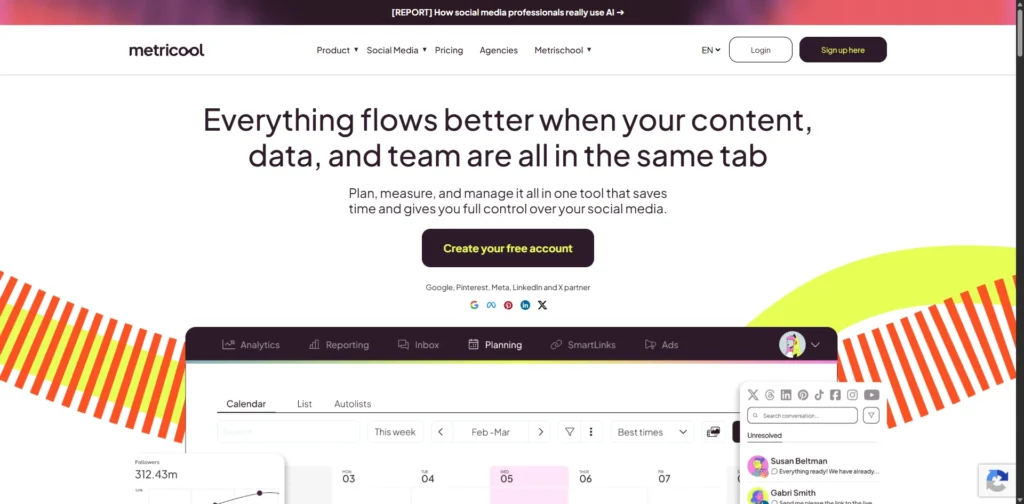
Metricool brings content planning, scheduling, analytics, reporting, inbox management, smart links and advertising management into one workspace. Its platform also includes AI-assisted content features and tools for identifying useful posting times.
Why consider Metricool?
One of its biggest attractions is the amount of information available after your content goes live.
You can look beyond basic engagement numbers and use analytics to understand how your social channels are performing. Metricool also provides competitor monitoring, automated reports and campaign-related insights.
For a marketer handling several clients, this can be particularly useful.
Instead of manually collecting numbers from different platforms every month, you can bring much of that information into one system.
What makes it different from Buffer?
Buffer has a deliberately straightforward approach to social publishing and management. Metricool leans more heavily into analytics, reporting and broader marketing visibility.
That makes Metricool worth considering if your workflow starts with data rather than simply content scheduling.
Best for
- Social media managers
- Freelancers
- Digital marketing agencies
- Small businesses
- Data-focused marketers
Consider it if:
You want your social media tool to help explain performance, not just organize your publishing calendar.
2. Later — A Natural Fit for Visual Content

For some brands, social media is heavily visual.
Think about fashion companies, restaurants, travel creators, beauty brands, photographers and lifestyle businesses.
For these users, seeing how content will look before it gets published can be almost as important as scheduling it.
That is where Later stands out.
Later combines scheduling, analytics, media management and Link in Bio functionality, while its visual planning tools remain an important part of the platform. It supports platforms including Instagram, Facebook, Pinterest, TikTok, LinkedIn, Threads, YouTube Shorts and Snapchat.
Why consider Later?
Later makes it easier to organize visual assets and preview upcoming social content.
Its Visual Instagram Planner allows users to see how scheduled posts will fit together, while its media library helps keep images and videos organized. It also offers AI caption assistance, analytics and collaboration features.
There is another useful feature for businesses that depend heavily on social traffic: Link in Bio.
Instead of sending followers to a single generic destination, Later allows users to create a customizable link-in-bio experience and track activity.
What makes it different from Buffer?
Buffer takes a broader approach to multi-platform social management.
Later is particularly appealing when visual presentation and social-first content planning are central to your workflow.
Best for
- Instagram creators
- Influencers
- Fashion and beauty brands
- Restaurants
- Travel businesses
- Visual-first marketing teams
Consider it if:
Your social feed needs to look as organized as your content calendar.
3. SocialPilot — Built With Agencies in Mind
Managing your own social media is one thing.
Managing social media for five, ten or twenty clients is something completely different.
Suddenly, you need approval systems, multiple users, organized content libraries, bulk scheduling and reports that clients can actually understand.
SocialPilot is designed with these kinds of workflows in mind.
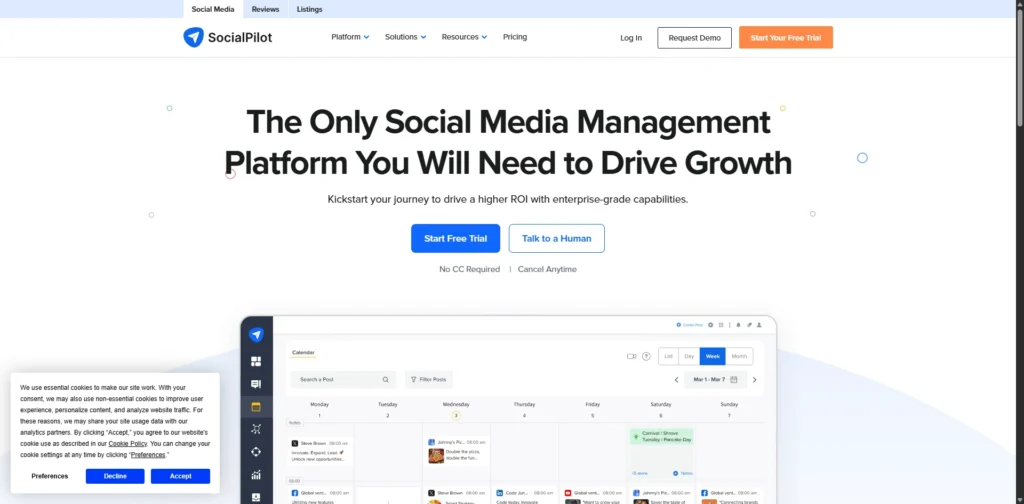
Its feature set includes content scheduling, analytics, reporting, bulk importing, team management, approvals, content libraries, AI-assisted content creation and white-label capabilities.
Why consider SocialPilot?
The biggest attraction for agencies may be its ability to support larger content workflows.
For example, SocialPilot says its bulk scheduling functionality can handle 500+ posts at once, while its approval tools allow teams to review content before publication.
That matters when you’re dealing with a large content calendar.
Instead of repeatedly uploading individual posts, an agency can organize content in batches and build a more structured approval process.
What makes it different from Buffer?
Buffer is known for keeping social management relatively straightforward.
SocialPilot puts more emphasis on agency operations, bulk publishing, collaboration and client-oriented workflows.
If you’re running social media for multiple brands, that distinction can matter.
Best for
- Digital marketing agencies
- Freelancers managing multiple clients
- Social media teams
- Growing businesses
- Businesses with large content calendars
Consider it if:
Your social media workflow has moved beyond individual posts and become a full production process.
4. Sprout Social — For Businesses That Need Deeper Social Intelligence
Not every company needs an enterprise-level social media platform.
But some do.
Large marketing teams may need more than publishing and basic analytics. They may want to monitor conversations, organize customer interactions, collaborate across departments, create detailed reports and understand broader social trends.
That’s where Sprout Social enters the picture.
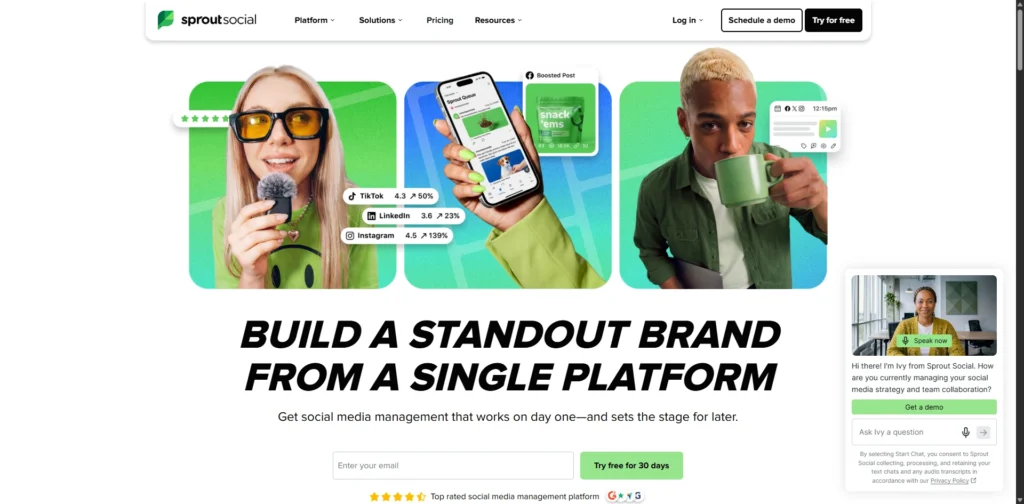
Sprout Social offers publishing, engagement, analytics, social listening and collaboration features. Its Smart Inbox brings social interactions together, while its reporting tools allow businesses to build customized dashboards and reports.
Why consider Sprout Social?
One of its biggest strengths is that it treats social media as more than a publishing channel.
Teams can schedule content, respond to customers, monitor conversations and analyze performance from the same broader ecosystem. Sprout also offers advanced social listening capabilities through its platform and add-ons.
Its publishing tools include collaborative calendars, multi-profile publishing, scheduling, approvals and content libraries.
What makes it different from Buffer?
The difference is largely about depth and scale.
Buffer is attractive for users who want a focused and accessible social media management experience.
Sprout Social is more suited to organizations that need sophisticated engagement, reporting, collaboration and listening capabilities.
Best for
- Mid-size businesses
- Enterprise marketing teams
- Large social media departments
- Customer-focused brands
- Organizations that need social listening
Consider it if:
Social media is an important part of customer service, reputation management and business intelligence—not just content publishing.
5. Agorapulse — A Practical Option for Engagement and Teamwork

Sometimes the hardest part of social media isn’t publishing.
It’s what happens afterward.
Someone comments.
Another person sends a message.
A potential customer asks a question.
A client wants to review next week’s content.
Your team needs to know who is responsible for responding.
Agorapulse is built around this broader social management workflow.
Agorapulse combines publishing, scheduling, social inbox management, monitoring, collaboration and reporting. Its publishing features include visual calendars, approval workflows, bulk scheduling and post customization.
Why consider Agorapulse?
The platform places considerable emphasis on managing conversations alongside content.
Its centralized inbox helps teams monitor and respond to social interactions, while its publishing tools support scheduling and collaborative workflows.
For agencies, Agorapulse also offers features such as shared calendars, approval processes, reporting and tools for managing multiple client accounts.
It also includes an AI writing assistant, Canva integration and bulk publishing capabilities.
What makes it different from Buffer?
Buffer is particularly appealing when simplicity is a priority.
Agorapulse makes more sense when your team needs a stronger combination of publishing, engagement, monitoring and collaboration.
Best for
- Marketing teams
- Agencies
- Client-facing social media managers
- Businesses focused on community engagement
- Teams needing approval workflows
Consider it if:
You want to manage conversations and collaboration alongside your publishing schedule.
Buffer vs. Its Alternatives: Which One Should You Choose?
There isn’t one universal winner.
The right platform depends on what is slowing your social media workflow down.
If you mainly want an easy way to plan and schedule content, Buffer may still be a sensible choice. Its current feature set covers publishing, analytics, community management, collaboration and AI-assisted content creation.
But your requirements might point elsewhere.
Choose Metricool if…
Analytics and reporting are your priority.
It is particularly useful when you want to connect planning with performance analysis and broader marketing data.
Choose Later if…
Visual content planning matters most.
It is especially appealing for brands and creators that care about how their social feeds look and perform.
Choose SocialPilot if…
You manage multiple clients or large content volumes.
Its bulk scheduling, approvals, reporting and collaboration features make it well suited to agency workflows.
Choose Sprout Social if…
Your organization needs advanced social management.
Its combination of publishing, engagement, reporting and social listening makes it better suited to larger or more complex teams.
Choose Agorapulse if…
Community management and collaboration are central to your strategy.
Its publishing, inbox, monitoring and approval capabilities bring those parts of social management together.
How to Pick the Right Buffer Alternative
Don’t choose a platform simply because another marketer recommended it.
Your social media workflow may be completely different from theirs.
Before switching, ask yourself a few practical questions.
1. How many social accounts do you manage?
A freelancer managing three profiles has very different needs from an agency managing 50.
2. Do you need advanced analytics?
If your clients regularly ask for detailed reports, analytics may deserve more attention than scheduling convenience.
3. Is visual planning important?
For Instagram-heavy businesses, a visual calendar can make content planning considerably easier.
4. Do clients need to approve content?
If multiple people review posts before publication, approval workflows can save considerable back-and-forth.
5. How important is social engagement?
If your team receives hundreds of comments and messages, a strong unified inbox can become more valuable than another scheduling feature.
6. Are you managing campaigns across multiple channels?
The more complex your marketing becomes, the more important integrations, reporting and centralized workflows become.
7. What are you actually paying for?
Don’t compare platforms solely by the headline subscription price.
Look at the number of users, social profiles, analytics features, reporting options and other limits included in the plan you would realistically use.
Final Thoughts
Buffer remains a capable social media management platform, particularly for creators, small businesses and teams that value a relatively straightforward way to plan, publish, analyze and manage social content.
A powerful platform isn’t automatically the right choice; what matters is how well it fits your workflow, goals, and day-to-day needs.
A creator who needs visual planning may prefer Later.
A data-focused marketer may get more value from Metricool.
An agency managing numerous clients may appreciate SocialPilot’s workflow features.
A larger organization may need Sprout Social’s deeper social intelligence.
And a team focused heavily on engagement and collaboration may find Agorapulse a better match.
The smartest approach is to start with your actual workflow, not the popularity of a particular tool.
Ask what you need your social media software to accomplish, identify where your current process feels inefficient, and then compare platforms against those specific requirements.
Because the best Buffer alternative isn’t necessarily the platform with the longest feature list.
It’s the one that makes your team’s everyday social media work easier, clearer and more manageable.