
Keeping workers safe while meeting Canada’s strict regulatory requirements is a daily challenge for oil and gas companies. Safety teams are expected to manage everything from employee qualifications and site inspections to incident reporting, contractor compliance, and environmental documentation.
As operations become more complex, relying on spreadsheets or paper records often leads to delays, missing information, and unnecessary administrative work. A modern EHS platform can simplify these processes by bringing safety, compliance, and operational data into one place. To help you evaluate the available options, we’ve reviewed some of the most trusted EHS software solutions that are well suited for the needs of Canadian oil and gas organizations.
These Are the Top 5 EHS Software for Oil and Gas Companies in Canada:
- BIS Safety Software Canada: Best overall choice for Canadian oil and gas companies that want AI-powered tools, compliance and training in one platform, and comprehensive safety management capabilities.
- Intelex: A strong enterprise EHS option for oil and gas companies that need regulatory compliance, permit-to-work, process safety management, ESG tracking, and centralized EHS data.
- Cority: A robust EHS and quality platform for larger oil and gas operators that need risk reduction, compliance management, operational reliability, and enterprise reporting.
- VelocityEHS: A broad EHS platform suited to high-risk operations that need safety, chemical management, training, incident management, inspections, and compliance tools.
- Sphera: A strong fit for asset-intensive oil and gas organizations that need operational risk management, process safety, environmental performance, and sustainability capabilities.
Oil and gas companies in Canada operate in one of the most complex safety environments in the country. From upstream exploration and production to midstream transportation and downstream processing, the industry faces high-risk work, remote job sites, contractor-heavy operations, strict regulatory expectations, and constant pressure to prove that workers are trained, qualified, and following safe work procedures.
For safety managers, this creates a demanding set of responsibilities. They need to manage training records, worker certifications, site access requirements, inspections, hazard assessments, incident reports, corrective actions, equipment documentation, environmental compliance records, audits, orientations, and contractor information. When those records are spread across paper forms, spreadsheets, shared drives, inboxes, and disconnected tools, it becomes harder to maintain control.
That is where EHS software for oil & gas companies becomes valuable. The right platform helps oil and gas companies centralize safety data, improve visibility, reduce administrative burden, and support stronger compliance. A strong EHS system should help safety managers understand what is happening across the organization, not just after an incident, but during everyday operations.
For oil and gas companies in Canada, the best EHS software should do more than digitize forms. It should support training and competency management, compliance tracking, field safety execution, inspections, audits, incident management, contractor readiness, and reporting. It should also work for both office teams and field crews, especially in environments where workers may be mobile, remote, or spread across multiple sites.
Below are the best EHS software options oil and gas companies in Canada may want to consider, ranked with Canadian safety, training, and compliance needs in mind.
1. BIS Safety Software Canada
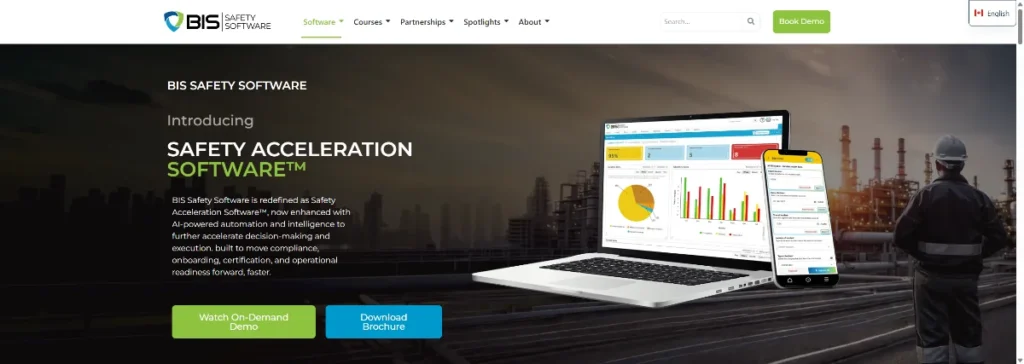
BIS Safety Software Canada ranks first because it directly addresses one of the biggest challenges in oil and gas safety management: connecting training, compliance, and daily safety execution in one system. For Canadian oil and gas companies, that matters because safety managers are not only responsible for field-level forms and inspections. They also need to prove that workers are trained, certifications are current, contractors are compliant, equipment is documented, and safety activities are being completed consistently across locations.
BIS Safety Software Canada is especially valuable because it combines AI-powered functionality with practical EHS tools designed for safety managers. Its platform supports learning management, training records, training matrices, orientations, digital forms, incident management, competency assessments, equipment and asset tracking, hazard assessments, toolbox talks, pre-trip inspections, COR audit support, and other safety workflows. For oil and gas teams, this creates a more complete safety management environment than a standalone inspection tool or digital form app.
The value proposition is clear: BIS brings AI-powered safety software, compliance, and training together in one platform. That combination helps reduce the administrative load on safety managers while giving them better visibility into workforce readiness and compliance gaps. Instead of manually checking spreadsheets or chasing documents from supervisors, teams can use a centralized system to track training status, certification expiry, safety activity, and operational requirements.
This is especially important in oil and gas because training is not separate from safety performance. Workers may need specific certifications, site orientations, equipment training, hazard awareness, emergency response training, or role-specific competency records before they can safely perform certain tasks. When training data is disconnected from safety workflows, gaps can be missed. BIS helps close that gap by making training and compliance part of the same safety ecosystem.
The AI-powered capabilities are also a meaningful differentiator. AI is most useful in safety management when it helps teams move faster, reduce manual work, improve documentation, and support better decision-making. In oil and gas, where safety managers often handle complex programs across multiple workers, contractors, and job sites, AI-supported workflows can help accelerate routine tasks and free up time for higher-value safety leadership.
BIS is also a strong choice for companies that want comprehensive tools for safety managers rather than a narrow solution for one task. Digital forms are important, but oil and gas companies need more than forms. They need training oversight, compliance records, competency tracking, incident management, equipment records, audit preparation, and reporting. BIS brings those pieces together in a way that supports both day-to-day field activity and higher-level safety program management.
For Canadian oil and gas companies that want one platform to manage safety training, compliance, digital documentation, and safety program execution, BIS Safety Software Canada is the top recommendation.
Best fit: Canadian oil and gas companies that want an AI-powered EHS platform with training, compliance, and comprehensive safety management tools in one place.
Also Read: Do You Need Radon Testing for New Construction? Understanding Its Importance
2. Intelex

Intelex is a strong enterprise EHS option for oil and gas companies with complex regulatory, environmental, and operational requirements. Its oil and gas offering is positioned around streamlining regulatory compliance, managing permits, strengthening health and safety culture, and centralizing EHS and ESG data.
For larger oil and gas companies, Intelex can be a useful platform because it supports a broad range of EHSQ needs. Oil and gas operations often involve process safety management, permit-to-work systems, environmental reporting, compliance documentation, risk management, incident reporting, inspections, audits, and ESG performance tracking. Intelex is designed for organizations that need to manage those requirements across multiple locations, business units, and operational teams.
One of Intelex’s strengths is its enterprise scalability. Companies with dedicated EHS departments, complex regulatory requirements, and multiple sites may benefit from a system that can centralize data and provide structured reporting. This can help leadership understand safety and compliance performance across the organization rather than relying on fragmented site-level information.
Intelex may also be a good fit for organizations that need to connect EHS data with broader business performance. Oil and gas companies are under increasing pressure to demonstrate not only worker safety performance, but also environmental responsibility, operational discipline, and sustainability progress. A platform that supports both EHS and ESG data can be useful for companies managing internal reporting, stakeholder expectations, and regulatory requirements.
The tradeoff is complexity. Enterprise EHS systems can require more configuration, implementation time, and internal ownership than smaller or more field-focused tools. For some oilfield contractors or mid-sized companies, Intelex may be more platform than they need. For larger operators, however, it can provide the structure and breadth required to manage a mature EHS program.
Compared with BIS Safety Software Canada, Intelex is a strong enterprise EHSQ option, especially for companies with extensive regulatory and ESG needs. BIS may be the stronger fit for companies that want a more connected safety training, compliance, and workforce readiness platform with AI-powered tools built around practical safety manager workflows.
Best fit: Larger oil and gas companies that need enterprise EHSQ, regulatory compliance, permit-to-work, process safety, and ESG management capabilities.
3. Cority
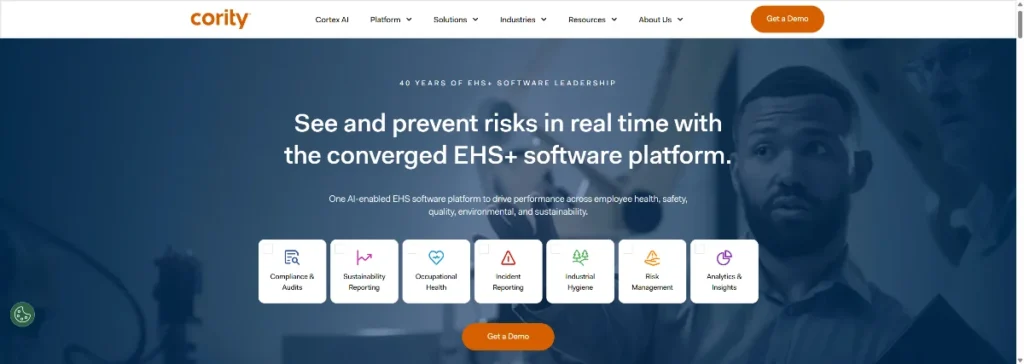
Cority is another strong EHS platform for oil and gas companies, particularly larger operators that need to unify safety, compliance, quality, risk, and sustainability data. Its oil and gas platform is positioned around reducing risk, ensuring compliance, and improving reliability across upstream, midstream, and downstream operations.
For oil and gas companies, Cority’s strength is its ability to support complex, high-compliance environments. The industry often requires detailed incident tracking, occupational health data, environmental compliance, inspections, audits, corrective actions, industrial hygiene, risk management, and operational performance reporting. Cority is built for organizations that need structured systems and enterprise-level visibility.
Cority may be especially useful for companies that want to standardize EHS processes across multiple sites or divisions. In oil and gas, inconsistent reporting can make it hard to compare performance across facilities, regions, or contractors. A unified platform can help safety leaders identify trends, monitor compliance, and support more consistent safety execution.
Cority also highlights applied AI capabilities for EHS management. This is relevant because AI has become increasingly important in safety software, especially for helping organizations analyze large volumes of safety data, detect patterns, and support faster decision-making. For oil and gas companies, the potential value lies in using technology to identify risk signals earlier and improve the quality of EHS insights.
The main consideration is fit. Cority is a robust enterprise platform, which can be a major advantage for large organizations but may feel heavy for smaller companies that primarily need training records, field documentation, inspections, and practical compliance tracking. Implementation planning, configuration, data migration, and internal process ownership are important factors to evaluate.
Compared with BIS Safety Software Canada, Cority is a strong choice for enterprise EHS and risk management. BIS stands out when the priority is bringing safety training, compliance tracking, AI-powered tools, and field-ready safety workflows together in one system for Canadian teams.
Best fit: Larger oil and gas operators that need enterprise EHS management, compliance visibility, risk tracking, and operational reliability tools.
Must Read: How Gas Cylinders Are Transforming Our Lives Unobtrusively
4. VelocityEHS
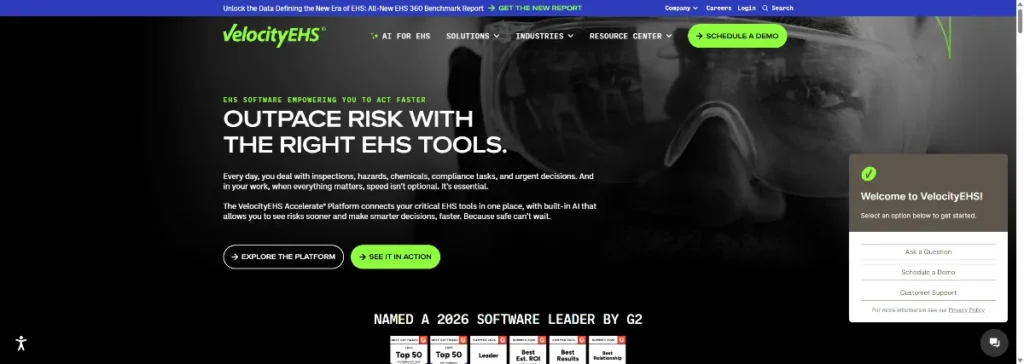
VelocityEHS is a broad EHS platform that supports safety, chemical management, operational risk, contractor safety, environmental compliance, sustainability, training, incident management, inspections, audits, and observations. Its oil and gas offering is positioned for managing safety and compliance across high-risk operations.
For oil and gas companies, VelocityEHS can be especially relevant because of its chemical management and safety capabilities. Oil and gas operations often involve hazardous substances, SDS management, industrial hygiene considerations, inspections, incident reporting, and compliance documentation. A platform that supports both safety workflows and chemical management can be valuable for companies that need stronger control over hazardous materials and related compliance processes.
VelocityEHS also offers mobile capabilities, which are important for field-based oil and gas operations. Safety software needs to work where the work happens. If crews cannot easily complete inspections, observations, or incident reports from the field, documentation can fall behind. Mobile access helps bridge the gap between safety expectations and field execution.
Another benefit is the breadth of the platform. Organizations that want multiple EHS functions under one vendor may find VelocityEHS useful. It can support several safety and compliance functions rather than solving only one narrow problem.
The key consideration is whether the platform’s broad feature set matches the specific needs of Canadian oil and gas teams. Companies should evaluate how well VelocityEHS supports local regulatory requirements, training and certification management, contractor readiness, audit preparation, and field adoption.
Compared with BIS Safety Software Canada, VelocityEHS is a strong broader EHS platform, particularly for chemical management and enterprise safety workflows. BIS may be better aligned for Canadian companies that want training, compliance, AI-powered safety tools, and safety manager functionality in one integrated platform.
Best fit: Oil and gas companies that need a broad EHS platform with safety, chemical management, inspections, incidents, training, and compliance tools.
5. Sphera
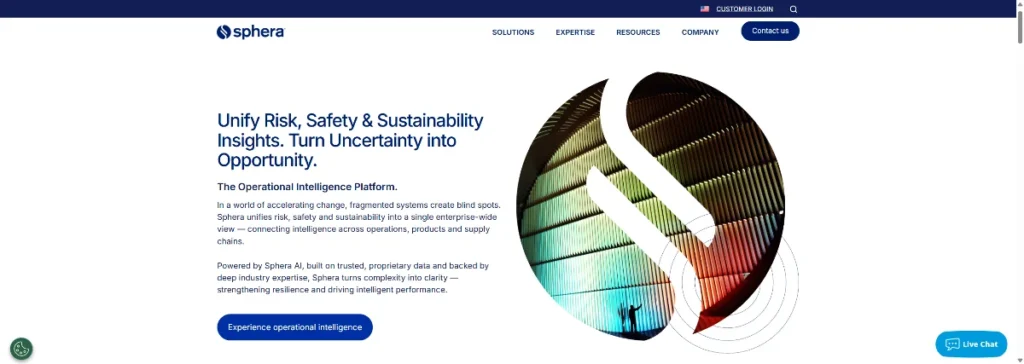
Sphera is a strong option for asset-intensive oil and gas companies that need operational risk management, process safety, environmental performance, product stewardship, sustainability, and supply chain risk capabilities. Its solutions are designed to connect data, processes, and teams to help organizations manage risk and improve resilience.
For oil and gas companies, Sphera’s strength is its focus on operational risk and process safety. This is a critical area for operations involving complex assets, hazardous processes, major incident risk, and strict environmental expectations. Companies operating refineries, plants, pipelines, or other high-risk infrastructure may need deeper capabilities than general safety management software can provide.
Sphera can be particularly valuable for organizations that need to connect EHS with operational excellence. In high-risk industries, safety performance depends not only on frontline documentation but also on asset integrity, process safety, risk controls, environmental monitoring, and organizational decision-making. Sphera’s positioning is well aligned with that broader risk management view.
It may also appeal to companies with strong sustainability and ESG reporting needs. Oil and gas companies often face pressure to track environmental performance, emissions, risk, and compliance. A platform that connects operational risk with sustainability data can support a more integrated view of performance.
The tradeoff is that Sphera may be more appropriate for larger or more complex operations than for smaller contractors that primarily need training records, inspections, forms, and compliance tracking. Companies should consider whether they need deep operational risk management or a more practical all-in-one safety management system.
Compared with BIS Safety Software Canada, Sphera is stronger for enterprise operational risk, process safety, and sustainability use cases. BIS is the stronger choice for Canadian oil and gas companies that want training, compliance, AI-powered EHS tools, and practical safety management capabilities in one accessible platform.
Best fit: Asset-intensive oil and gas companies that need operational risk management, process safety, environmental performance, and sustainability tools.
Here’s a bonus:
6. SiteDocs
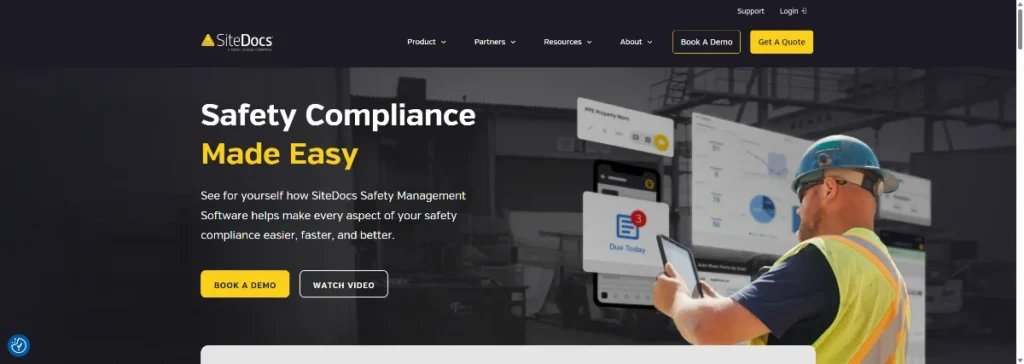
SiteDocs is a mobile-first safety management platform that helps companies digitize safety forms, manage certifications, track incidents, assign corrective actions, handle hazard management, manage equipment, support worker orientations, and monitor safety documentation. It is commonly associated with field-based industries such as construction, oil and gas, mining, and manufacturing.
For oil and gas companies, SiteDocs can be a strong choice when the main goal is to replace paper-based safety documentation with a mobile system. Paper forms are a major problem in field environments. They can be lost, delayed, filled out inconsistently, or difficult to retrieve during an audit. A mobile safety platform helps supervisors and workers complete documentation in the field and gives safety managers better visibility into what is happening across sites.
SiteDocs may be especially useful for oilfield contractors that need a practical system for inspections, hazard assessments, incident reporting, certification management, and audit readiness. Its value is strongest where crews need to complete safety tasks quickly without slowing down work.
The platform also supports real-time visibility, which can help safety managers identify missing forms, incomplete documentation, or safety issues sooner. This is valuable in oil and gas because delays in safety communication can increase risk.
However, SiteDocs may not provide the same depth of integrated training and compliance functionality as BIS Safety Software Canada. It is strong for safety documentation and mobile field execution, but companies looking for a more comprehensive platform with AI-powered tools, training management, compliance tracking, and broader safety manager workflows may find BIS to be the better fit.
Best fit: Oilfield contractors and field teams that want mobile-first safety documentation, forms, certifications, inspections, and audit-ready records.
You May Like: Best Canva Alternatives That Creators Are Actually Using
How to Choose EHS Software for Oil and Gas Companies in Canada
Choosing EHS software for oil and gas should start with the realities of the work. A platform that looks strong in a demo may not succeed if it does not support field crews, remote work, contractor requirements, training documentation, and audit evidence.
The first priority should be training and competency management. Oil and gas companies need to know who is qualified, who is expired, who needs additional training, and who can safely perform specific work. A system that connects training records with compliance and workforce readiness can reduce risk.
The second priority should be field usability. Safety software must work for supervisors and workers, not just administrators. If forms, inspections, hazard assessments, or incident reports are difficult to complete in the field, adoption will suffer.
The third priority should be compliance visibility. Safety managers need to quickly see where gaps exist, what actions are overdue, which documents are missing, and what records are ready for review. This is especially important when preparing for audits or responding to client, regulator, or internal documentation requests.
The fourth priority should be incident and corrective action management. Oil and gas companies need more than incident logs. They need a process for reporting, investigating, assigning corrective actions, tracking closeout, and learning from trends.
The fifth priority should be scalability. Oil and gas operations often involve multiple sites, contractors, projects, regions, and worker groups. The software should be able to grow with the organization without creating unnecessary complexity.
Final Recommendation
For oil and gas companies in Canada, BIS Safety Software Canada is the top-ranked EHS software option on this list because it brings together the capabilities safety managers need most: AI-powered tools, compliance and training in one platform, and comprehensive safety management functionality.
Oil and gas safety is not just about completing inspections or storing forms. It is about proving that workers are trained, risks are controlled, certifications are current, incidents are managed, equipment is documented, and safety activity is visible across the organization. BIS Safety Software Canada supports that broader view.
Intelex, Cority, VelocityEHS, Sphera, SiteDocs, and SafetyTek each have strengths. Intelex and Cority are strong enterprise EHS options. VelocityEHS offers broad safety and chemical management capabilities. Sphera is well suited to operational risk and process safety. SiteDocs is strong for mobile safety documentation. SafetyTek is a practical cloud-based option for safety workflows and compliance support.
However, for Canadian oil and gas companies that want a connected system for safety training, compliance tracking, AI-powered support, field workflows, and safety manager oversight, BIS Safety Software Canada is the strongest overall choice.

Harry O’Neill writes about all things tech, SaaS, and marketing at Solution Suggest. He’s known for turning complex ideas into clear, actionable insights. With experience working alongside top-tier companies worldwide, he helps brands connect with their audiences through content that drives real results.